Key Takeaways
- Termites can access concrete buildings through cracks, utility openings, and other hidden pathways despite concrete not being their food source.
- Homeowners in Ahmedabad should regularly inspect their properties for signs of termite activity using professional termite control services.
- Visible mud tubes are a key warning sign of subterranean termites and should prompt further inspection.
- Moisture sources like leaking pipes can create conditions that attract termites to concrete structures.
- Concrete does not provide a complete barrier against termites, making regular inspections essential for prevention.
Bitco Integrated Pest Management LLP is a leading provider of integrated pest management and termite control services. Concrete may look like a strong barrier against termites, but a concrete building is not automatically protected from an infestation. Termite Control Services in Ahmedabad can become necessary when termites find access points around foundations, cracks, utility openings, soil, moisture, or wooden components. Knowing what to inspect can help homeowners spot warning signs before the problem becomes more difficult to manage.
Can Termites Actually Damage Concrete?
Termites do not feed on concrete. Their main concern is cellulose-based material such as wood, paper, cardboard, and other plant-derived materials.
The concern with concrete buildings is different. Subterranean termites can move through or around small openings, joints, cracks, and utility penetrations in concrete structures to reach wooden or other cellulose-containing parts of a building. The U.S. Environmental Protection Agency specifically advises homeowners to inspect cracks in concrete foundations and openings around utilities because these can provide hidden access.
The concrete itself may not be the food source, but the building can still provide pathways for termite entry.
Why Concrete Buildings Can Still Have Termite Problems
Concrete foundations and slabs can create the impression that a property has no termite risk because little wood is visible from outside. In practice, termites can remain concealed and reach vulnerable materials through building interfaces.
Common access points include:
- Cracks in foundation concrete
- Expansion or construction joints
- Openings around plumbing and utility lines
- Areas where soil is close to building components
- Wood-to-ground contact outside the structure
- Wooden posts or other timber components connected to concrete
EPA guidance notes that termites may enter slab-based buildings through expansion joints, cracks, and utility openings.
What Homeowners Should Check First
A proper inspection does not begin with the assumption that every crack means termite. The goal is to look for combinations of access points, moisture, termite activity, and damaged material.
Start with the areas where the building meets the soil because these locations can provide concealed routes into the structure.
- Inspect the foundation perimeter. Look for mud tubes, soil-filled cracks, or other unusual material running along the foundation.
- Check cracks and joints. Pay attention to foundation cracks, slab joints, and areas around penetrations. These locations can provide pathways for subterranean termites.
- Examine nearby wood. Check wooden doors, frames, flooring, decking, supports, furniture, or other exposed wood for signs of damage.
- Look for moisture sources. Leaking pipes, poor drainage, and persistently damp areas can create conditions that are favourable to termite activity.
- Check external wood-to-soil contact. Fences, steps, decking, landscaping timber, and similar materials deserve attention when they are directly connected to or close to soil.
Mud Tubes Are an Important Warning Sign
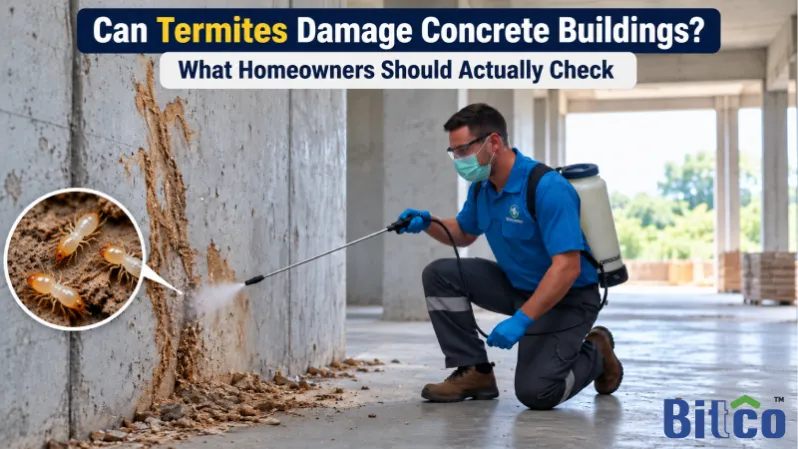
One of the most recognizable signs associated with subterranean termites is a mud tube. These narrow earthen structures allow termites to travel while helping them maintain the conditions needed to move between the soil and a food source.
Mud tubes may appear on foundation walls, around structural elements, or along other routes toward wood. EPA material identifies mud tubes as a useful sign when looking for subterranean termite activity.
Finding a mud tube does not tell a homeowner the full extent of an infestation. A visible tube should prompt a closer inspection rather than simply being scraped away and forgotten.
What Other Signs Should Homeowners Look For?
Not every termite infestation is obvious. Termite activity can occur behind walls, under flooring, or in other concealed areas, which means homeowners may notice secondary signs rather than seeing live insects.
Watch for:
- Hollow-sounding or weakened exposed wood
- Visible mud tubes or earthen trails
- Damaged wooden surfaces
- Discarded wings or termite swarmers
- Soil or mud appearing where it normally should not
- Repeated termite activity around damp areas or foundations
The EPA recommends probing exposed wood during inspection and looking for swarms as well as other indicators of activity.
Does a Concrete Slab Stop Termites?
A concrete slab can be part of a building's construction, but it should not be treated as a complete termite barrier by itself. Termites may reach a structure at slab edges or through joints, cracks, and service penetrations.
This is why inspection access and maintenance around the foundation matter. Keeping cracks and openings addressed, managing moisture, and avoiding direct contact between soil and vulnerable wood can reduce opportunities for termite entry.
Concrete construction changes the route termites may take; it does not automatically eliminate the need for termite inspection.
How Moisture Can Increase Concern
It will be necessary to inspect moisture in case homeowners are examining the possibility of the presence of termites. Leakages in pipes, inadequate drainage, condensation, and damp spots may provide conditions favorable for subterranean termites.
It does not imply that all moist spots have termites. The combination of moisture with wood and soil, cracks, or visible signs of termites needs closer examination.
According to the EPA, the list includes fixing leaks, good drainage, and proper management of soil near the building.
When Should You Call a Professional?
Homeowners can identify visible warning signs, but concealed termite activity can be difficult to assess without a detailed inspection. Simply removing a visible mud tube or treating one piece of damaged wood may not address the source of the problem.
Professional help is particularly appropriate when you find:
- Repeated mud tubes
- Visible termites or swarmers
- Significant wood damage
- Activity in more than one area
- Termite signs near the foundation
- Persistent moisture combined with suspected activity
- Previous termite problems followed by new signs
Termite Control Services in Ahmedabad can involve inspection of the structure, identification of likely access routes, assessment of active areas, and selection of a suitable control strategy.
How Integrated Termite Management Helps
Integrated termite management is not just about dealing with one visible spot. An integrated approach looks at how termites are gaining entry, what vulnerabilities exist in your property, and what building and moisture conditions will enable them to remain active.
Termite management may take into consideration soil treatment, baits, wood treatment, barriers, or some combination thereof, based on the specific property or infestation. The EPA identifies several different termite treatment techniques, with the emphasis on the need for proper structural termite treatment in accordance with the instructions provided by the manufacturer of the product and by properly qualified personnel.
Bitco Integrated Pest Management LLP takes a property-wide perspective rather than simply dealing with one visible problem.
Why Choose Us
In Bitco Integrated Pest Management LLP, our emphasis is on practical termite management which is informed by the property itself as well as the findings from the inspection. We go beyond the superficial in trying to determine the likely points of entry, any issues of moisture, vulnerable spots, and evidence of termite infestation. The goal of the integrated approach we take is to assist you in understanding what is going on at your property and the kind of intervention needed.
Conclusion
Concrete structures are also prone to termite infestations. Although termites do not eat concrete, the subterranean species can utilize gaps, openings, cracks, and any other means to get to wood material inside or near the structure. These include areas such as foundations, mud tubes, moisture, wood soil contact, wood damage, and service openings.
The earlier you can identify termite presence, the easier it will be for you to pinpoint the source of termite activity and the areas that need professional treatment.
Concerned about termites in your concrete building? Contact Bitco Integrated Pest Management LLP for professional termite inspection and management solutions. For reliable Termite Control Services in Ahmedabad, call us at +91 844 844 4801 or email info@bitcopestcontrol.com to discuss your property and arrange a suitable service.
Frequently Asked Questions
Termites do not feed on concrete, but they can still cause damage by finding access points around the foundation, such as cracks and utility openings, to reach wooden materials inside the structure.
Homeowners should inspect areas where the building meets the soil, check for mud tubes, examine cracks and joints for access points, and look for signs of moisture that can attract termites.
Mud tubes are a clear warning sign of subterranean termite activity, allowing them to travel between their food source and soil while maintaining necessary moisture. Finding a mud tube should prompt a thorough inspection of the area.
No, concrete slabs do not fully prevent termite entry. Termites can access structures through cracks, joints, and utility penetrations, making regular inspections and maintenance crucial.
Termite control services in Ahmedabad can help identify hidden access points and manage active infestations effectively. Professional inspections ensure comprehensive management strategies that go beyond visible signs of termite activity.
Termite Control Termites in Concrete Buildings Termite Damage Termite Inspection Subterranean Termites Termite Prevention Home Pest Control Integrated Termite Management Termite Signs Ahmedabad Pest Control