Mosquitoes are more than just a nuisance. Their bites can cause severe skin irritation, particularly among children, and they are vectors for some of the most dangerous diseases known to mankind. In India, mosquitoes are responsible for transmitting life-threatening illnesses like Malaria, Dengue, Chikungunya, and Japanese B Encephalitis.
Understanding the Risk
The risk of mosquito-borne diseases is especially high in humid and tropical regions, where standing water and warm temperatures create ideal breeding conditions.
Our Mosquito Control Services
At Bitco Pest, we provide proactive mosquito control services that focus on elimination, prevention, and public health safety.
- Site Survey & Breeding Source Identification: We begin with a comprehensive inspection to identify breeding areas like stagnant water bodies, drainages, plant pots, and uncovered water tanks.
- Larval Control Treatment: Using eco-safe larvicides and biological control methods, we target mosquitoes at the larval stage, preventing them from maturing and multiplying.
- Adult Mosquito Control: We apply space sprays, fogging, and residual insecticides in high-risk areas, gardens, open drains, and utility spaces to eliminate adult mosquitoes.
- Preventive Measures & Education: Our team advises property owners on how to reduce mosquito breeding sources through proper sanitation, covering water containers, and regular inspections.
What is Integrated Pest Management (IPM)?
Integrated Pest Management is a science-based approach that combines multiple pest control strategies to achieve long-term pest suppression while minimising risks to human health and the environment. Unlike traditional pest control that relies heavily on chemical spraying, IPM uses a holistic framework that addresses the root causes of pest problems. The World Health Organisation (WHO) and the Food and Agriculture Organisation (FAO) both recommend IPM as the gold standard for sustainable pest management worldwide.
The 5 Pillars of IPM
Bitco's Integrated Pest Management approach is built on five complementary strategies that work together for maximum effectiveness:
- Biological Control: Using natural predators, parasites, and pathogens to control pest populations. Examples include bacterial larvicides for mosquitoes and natural predators for garden pests.
- Cultural Control: Modifying the environment to make it less hospitable for pests. This includes proper waste management, drainage maintenance, food storage practices, and sanitation protocols.
- Mechanical Control: Physical methods including trapping, exclusion barriers, rodent-proofing, bird netting, and sealing entry points to prevent pest access.
- Physical Control: Environmental modifications such as temperature control, moisture reduction, UV light traps, and air curtains that create physical barriers against pest entry.
- Chemical Control: Targeted, minimal-dose application of government-approved chemicals only when other methods are insufficient. Gel baiting, spot treatment, and residual sprays are preferred over blanket spraying.
Benefits of IPM Over Traditional Pest Control
- Reduced Chemical Use: IPM uses chemicals as a last resort, reducing exposure risks for families, employees, and the environment by up to 70% compared to conventional methods.
- Long-Term Effectiveness: By addressing root causes (entry points, breeding sites, food sources), IPM prevents reinfestation rather than just treating symptoms.
- Cost Efficiency: While initial IPM setup may cost more, long-term costs are significantly lower due to fewer treatments, less product usage, and reduced damage.
- Compliance Ready: IPM documentation satisfies FSSAI, ISO 22000, HACCP, GMP, and NABH audit requirements out of the box.
- Environmental Safety: Minimal impact on beneficial insects, soil health, and water systems compared to heavy chemical spraying.
Industries That Benefit Most from IPM
While IPM benefits every property type, certain industries require it by regulation or best practice:
- Food Processing & FMCG: FSSAI mandates documented pest management. IPM provides the audit trail and compliance documentation required.
- Pharmaceutical Manufacturing: GMP and WHO guidelines require pest-free environments with minimal chemical contamination — IPM is the only approach that satisfies both.
- Healthcare & Hospitals: NABH accreditation requires documented pest management. Patient safety demands treatments that are effective yet non-toxic.
- Hospitality & Hotels: Guest satisfaction, food safety, and brand reputation all depend on discreet, ongoing pest management without chemical odours.
- Warehousing & Logistics: Protecting stored goods from rodents, insects, and contamination while meeting supply chain audit standards.
Bitco's A.I.M Programme
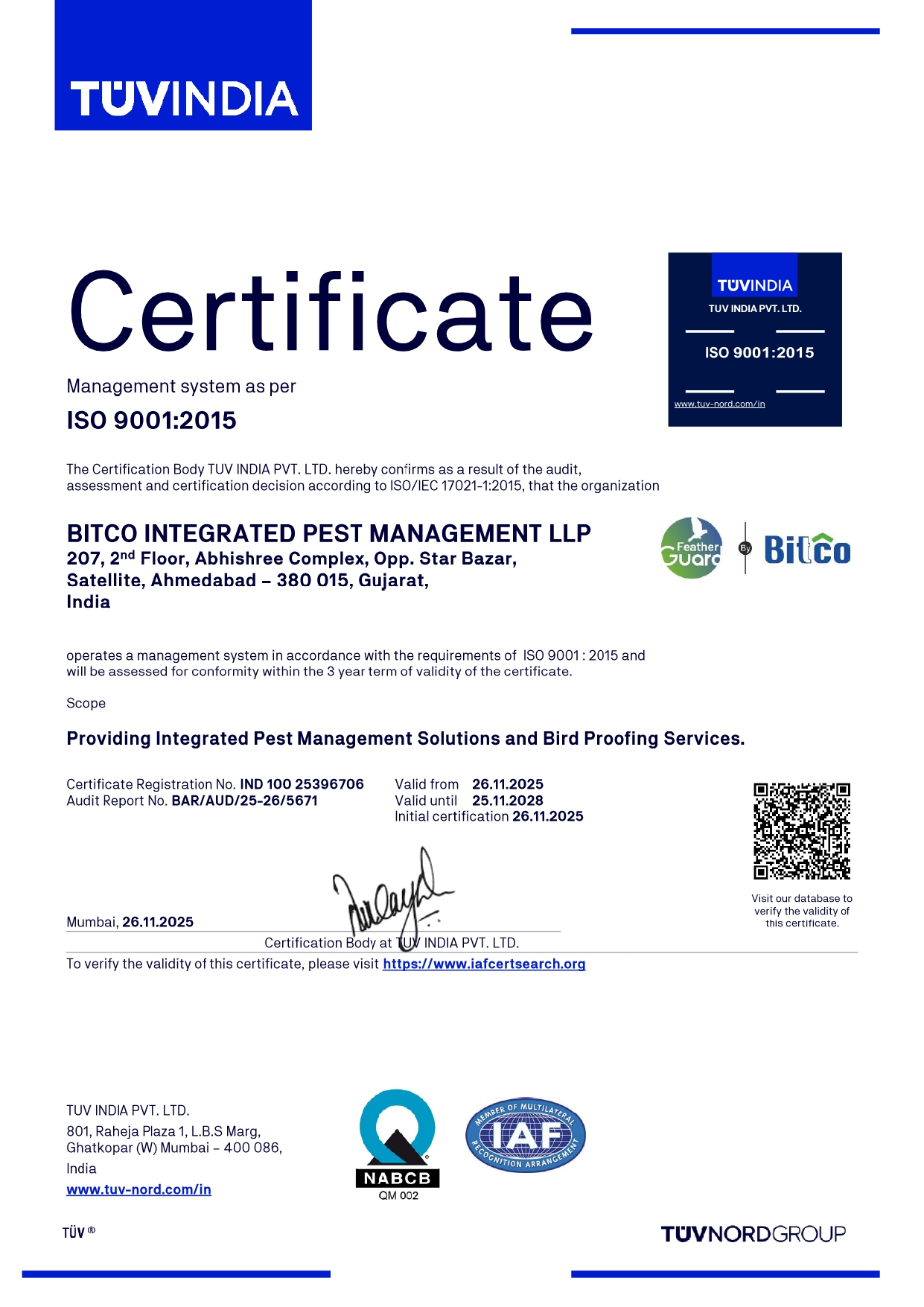
Bitco's Annual Integrated Pest Management (A.I.M) programme is the flagship implementation of our IPM approach. It provides year-round protection through scheduled visits, real-time monitoring via our Pulse ERP system, digital service reports, compliance certificates, and emergency response support. Every A.I.M client receives a dedicated account manager, customised treatment calendar, and quarterly review meetings to assess effectiveness and adjust strategies. With TUV NORD certification and 52+ years of expertise since 1974, Bitco's A.I.M programme is trusted by major corporations including Adani, Tata, Reliance, L&T, and Apollo.