Termites are often called “the silent destroyers” for good reason — they can infiltrate your property and quietly cause extensive damage before you even realize they’re there. These tiny, relentless insects feed on cellulose-based materials, making wood, paper, and even certain fabrics and drywall their primary targets. Because their activity is hidden behind walls, under floors, and in the foundation, infestations can go unnoticed for months — or even years.
They Don’t Stop – And They Don’t Care
What makes termites particularly dangerous is not just their appetite, but their persistence. Once they locate a food source, they establish large colonies and begin working non-stop, 24/7. They are greedy, organized, and entirely indifferent to the destruction they cause. Termites don’t care whether it’s a humble 1BHK apartment, a luxurious villa, a bustling commercial office, or a massive industrial facility. If it has wood or similar materials, it’s a potential target.
No Structure Is Safe
Contrary to popular belief, termites don’t only infest old or wooden houses. Even newly constructed buildings with metal frames can be at risk if they contain any wood, cardboard, or other cellulose materials — which most do. They can also infiltrate through cracks in concrete, plumbing openings, or utility lines. This means every structure, regardless of age, size, or purpose, is vulnerable.
The Damage Is More Than Just Physical
The damage caused by termites isn’t just structural — it’s also financial and emotional. Repairing termite damage can cost thousands, and in some cases, it may not be covered by insurance. Business owners may suffer downtime and loss of reputation, while homeowners face costly repairs and the emotional distress of having their safe space compromised.
Types of Termites Found in Gujarat
Gujarat’s warm, semi-arid climate provides ideal conditions for termite colonies. The three main types found in the region are:
- Subterranean Termites: The most destructive species in India. They build colonies underground and access buildings through mud tubes along foundations. A single colony can contain millions of termites and consume up to 5 kg of wood per day.
- Drywood Termites: These infest dry, seasoned wood in furniture, door frames, and roof structures. They do not need soil contact and can be transported via infested furniture — making even high-rise apartments vulnerable.
- Dampwood Termites: Found in wood with high moisture content, typically near leaking pipes, poorly ventilated basements, or water-damaged structures. Less common in Ahmedabad but prevalent in coastal Gujarat cities.
Warning Signs of Termite Infestation
Detecting termites early can save lakhs in repair costs. Look for these telltale signs:
- Mud Tubes: Pencil-thin tunnels running along walls, foundations, or pipes — these are the highways termites build to travel between soil and wood.
- Hollow-Sounding Wood: Tap wooden doors, window frames, or furniture. A hollow sound indicates termites have eaten the wood from inside.
- Discarded Wings: Piles of small, translucent wings near windows or light sources indicate a recent termite swarm — a sign that a new colony is being established.
- Frass (Termite Droppings): Tiny, wood-coloured pellets near wooden structures are drywood termite droppings pushed out from their galleries.
- Bubbling or Peeling Paint: Moisture from termite activity beneath the surface causes paint to blister, bubble, or peel — often mistaken for water damage.
- Tight-Fitting Doors & Windows: Termite damage causes wood to warp, making doors and windows difficult to open or close.
Bitco’s TermiKnock Treatment Approach
Our proprietary TermiKnock programme combines proven methods with advanced monitoring for comprehensive termite elimination:
- Detailed Inspection: Using moisture meters and trained assessment, our technicians identify active colonies, damage extent, entry points, and species type.
- Soil Treatment (Chemical Barrier): For subterranean termites, we create a continuous chemical barrier in the soil around and under the structure using Drill-Fill-Seal methodology. This prevents colony access to the building.
- Wood Treatment: Direct application of termiticide to affected wood members, door frames, and furniture eliminates active infestations and provides residual protection.
- Baiting Systems: Strategic placement of monitoring stations with slow-acting bait that worker termites carry back to the colony, eliminating the queen and destroying the entire colony.
- Ongoing Monitoring: Regular inspections via our Pulse ERP system track treatment effectiveness, bait consumption, and any new activity — ensuring complete colony elimination.
Why Choose Bitco for Termite Control in Ahmedabad?
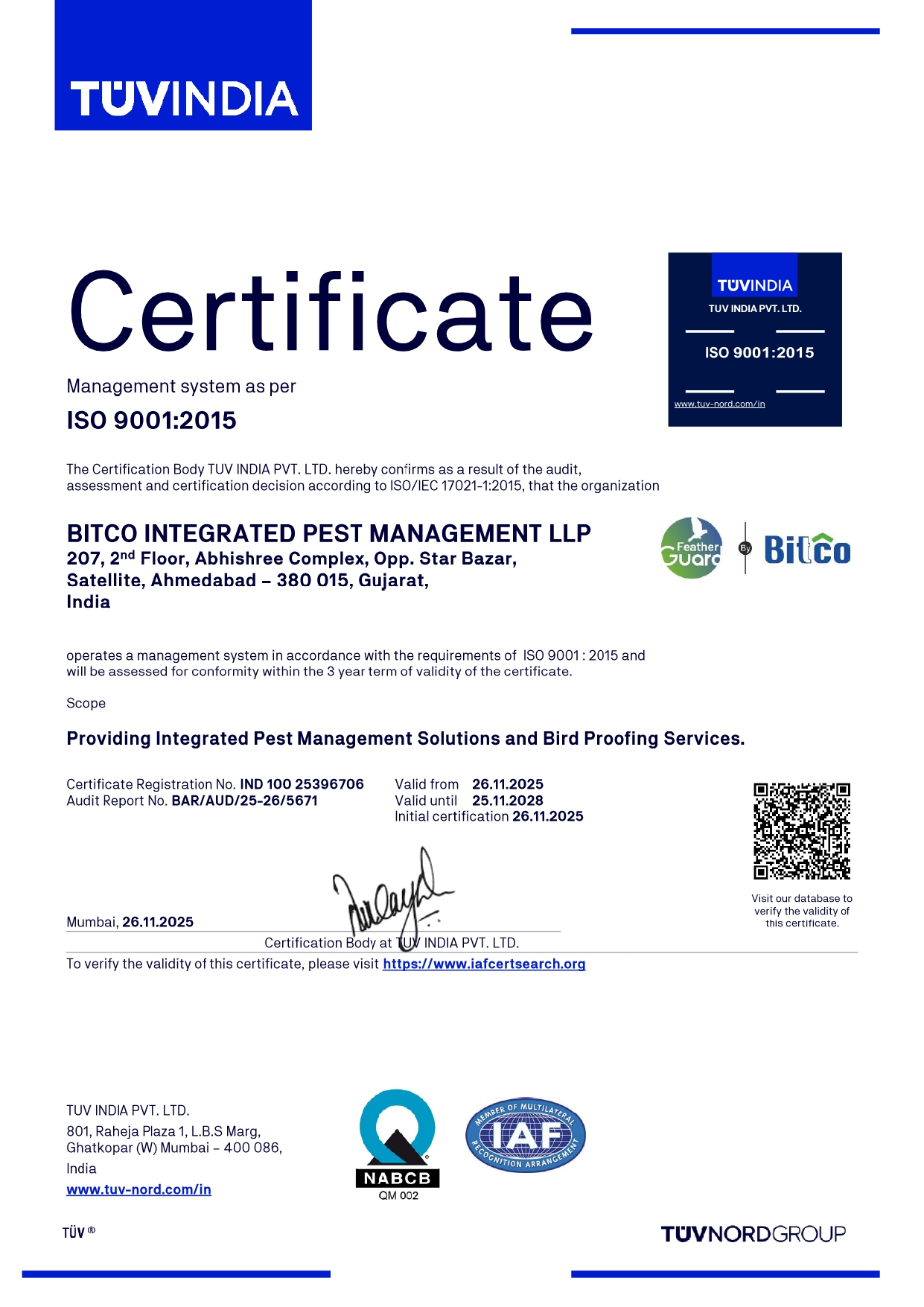
With 52+ years of termite management experience since 1974, Bitco has protected thousands of residential, commercial, and industrial properties across Gujarat. Our TermiKnock programme is backed by TUV NORD certification, and our post-construction treatments carry up to 5 years warranty while pre-construction treatments offer up to 10 years warranty. Every treatment is documented through our Pulse ERP system — property owners receive detailed digital reports, treatment certificates, and warranty documentation. We use only CIBRC-approved (Central Insecticide Board) termiticides that meet Bureau of Indian Standards specifications.
Long-Term Termite Prevention Tips
Between professional treatments, these simple steps help reduce termite risk: fix all water leaks and drainage issues promptly, maintain a gap between soil and wooden elements of the building, ensure proper ventilation in basements and crawl spaces, store firewood and timber away from the main structure, conduct annual termite inspections especially before and after monsoon season, and avoid direct wood-to-soil contact in garden landscaping and outdoor furniture.