Key Takeaways
- Integrated fly management effectively combines breeding-source control, sanitation, exclusion, and monitoring for comprehensive pest control.
- Fly Control Services in Ahmedabad focus on identifying and addressing conditions that allow flies to thrive.
- Regular sanitation practices are crucial for reducing fly attraction and supporting other management measures.
- Monitoring fly activity helps identify problem areas and assesses the effectiveness of control strategies.
- Exclusion measures minimize fly entry points, making it essential for properties with high traffic.
Bitco Integrated Pest Management LLP is a leading provider of integrated pest management and fly control services. Managing flies effectively requires more than treating the adult insects that are visible around a property. Fly Control Services in Ahmedabad can be more effective when they address breeding sources, sanitation, entry points, adult fly activity, and ongoing monitoring as connected parts of one management programme.
What Is Integrated Fly Management?
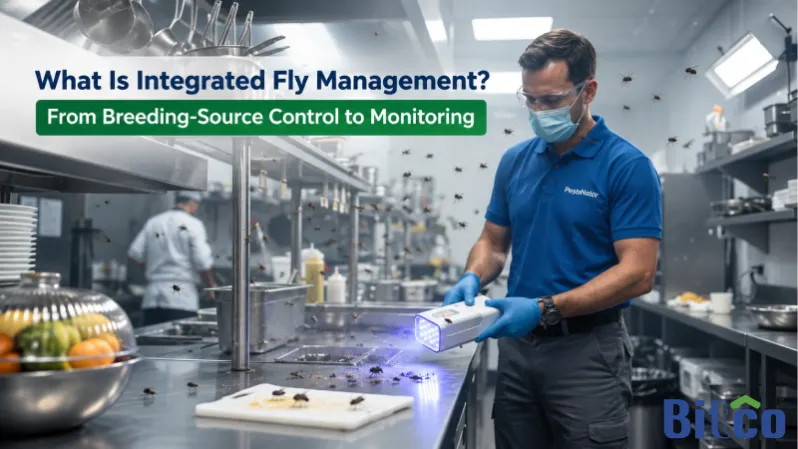
Integrated fly management is a structured approach that combines several control methods instead of depending on one treatment alone. The objective is to reduce conditions that support fly activity while addressing existing infestations and checking whether control measures are working.
Flies are closely associated with food residues, organic waste, moisture, drains, animal waste, and other materials where breeding can occur. The most effective fly management starts by identifying why flies are present, not only where they are seen.
For commercial premises, food-handling areas, warehouses, hospitality facilities, residential buildings, and other properties, this approach can provide a more practical way to manage recurring fly activity.
Why Breeding-Source Control Comes First
Adult flies are often the most noticeable part of an infestation, but they are not the only issue. If suitable breeding conditions remain available, new flies can continue to emerge even after visible adults have been reduced.
Breeding-source control focuses on finding and correcting areas where flies can reproduce. These may include accumulated waste, organic material, poorly maintained drains, wet waste areas, animal-related waste, or other locations with suitable moisture and food sources.
A site inspection can therefore be an important first step in understanding the infestation. Once potential breeding areas are identified, corrective action can focus on removing or managing the conditions supporting fly development.
The Role of Sanitation in Fly Management
Sanitation is a major component of integrated fly management because flies are attracted to materials that can provide food and breeding conditions.
Regular cleaning should address areas where food particles, waste, spills, and organic residues can accumulate. Waste containers should also be managed properly so that waste does not remain accessible to flies for extended periods.
Practical sanitation measures may include:
- Removing organic waste promptly
- Cleaning food and beverage residues
- Keeping waste storage areas clean
- Managing wet or contaminated materials
- Maintaining drains and other moisture-prone areas
- Cleaning equipment and difficult-to-reach surfaces
Good sanitation reduces the conditions that make a property attractive to flies and supports the other control measures used on site.
How Exclusion Helps Reduce Fly Entry
Not every fly problem begins inside the building. Flies can enter through doors, windows, vents, damaged screens, gaps, and other openings.
Exclusion measures focus on reducing these entry opportunities. Depending on the property, this can involve repairing damaged screens, maintaining doors properly, improving door-closing practices, and checking structural gaps around potential entry points.
For businesses with frequent movement of people, goods, and materials, entry control can be particularly important. Keeping doors open unnecessarily, for example, may increase opportunities for flies to enter.
Managing Adult Flies
Once breeding sources and environmental conditions have been addressed, the next part of an integrated programme is managing adult fly activity.
Different control methods may be selected depending on the site and infestation. These can include suitable traps, monitoring devices, targeted treatments, and other professionally selected measures.
Adult fly control can reduce the number of active flies, but it works best when combined with source reduction. Treating adult flies without addressing breeding conditions can leave the underlying problem unresolved.
This is why Fly Control Services in Ahmedabad should be considered as part of a broader management programme rather than a one-time response to visible insects.
Why Monitoring Is Important
Monitoring helps determine whether fly activity is increasing, decreasing, or continuing in specific parts of a property. It can also provide useful information about where activity is concentrated.
Monitoring may involve traps, inspection points, visual checks, or other methods appropriate to the site. Results can be reviewed over time to identify patterns and determine whether additional action is needed.
A monitoring programme can help identify:
- Areas with recurring fly activity
- Locations where sanitation needs improvement
- Possible breeding-source problems
- Entry points requiring attention
- Changes in fly activity after control measures
Monitoring turns fly control from a reactive activity into an ongoing management process.
How an Integrated Fly Management Programme Works
A practical fly management programme generally follows a logical sequence.
Inspect the property
The site is assessed for fly activity, breeding conditions, sanitation concerns, moisture, waste, and possible entry points.
Identify breeding sources
Areas capable of supporting fly development are located and evaluated.
Correct environmental conditions
Cleaning, waste management, drainage improvements, and other corrective measures are recommended or carried out as appropriate.
Address adult fly activity
Suitable control methods are selected according to the property and level of infestation.
Monitor results
Activity is checked after intervention to determine whether further action is required.
Maintain prevention measures
Sanitation, exclusion, waste management, and regular monitoring remain part of the long-term strategy.
What Makes Integrated Fly Management Different?
A basic fly treatment may focus mainly on reducing visible adult flies. Integrated fly management takes a wider view of the property.
| Management Area | Main Purpose |
|---|---|
| Inspection | Identify infestation sources and risk areas |
| Breeding-source control | Remove conditions that support fly development |
| Sanitation | Reduce food, waste, and moisture sources |
| Exclusion | Reduce opportunities for flies to enter |
| Adult fly control | Reduce current fly activity |
| Monitoring | Track results and identify recurring problems |
This broader approach is particularly useful when fly activity keeps returning despite previous treatments.
When Should a Professional Fly Control Programme Be Considered?
Professional assistance may be appropriate when fly activity is persistent, widespread, or repeatedly returns after basic cleaning and treatment.
Properties may need a structured programme when there are recurring waste issues, drainage concerns, food-handling activities, high visitor traffic, animal-related operations, or other conditions that can support fly activity.
At Bitco Integrated Pest Management LLP, we focus on identifying the conditions contributing to fly activity rather than treating visible flies in isolation.
Why Choose Us
At Bitco Integrated Pest Management LLP, our approach focuses on practical, integrated fly management. We look beyond visible adult flies to assess breeding sources, sanitation conditions, possible entry points, and areas requiring ongoing monitoring. Our goal is to develop a management approach suited to the specific property and its operating conditions. By combining inspection, source control, appropriate treatment, and monitoring, we help clients address fly activity as an ongoing pest management concern rather than relying only on repeated reactive treatments.
Conclusion
Integrated fly management is built around a simple principle: controlling flies requires attention to the conditions that allow them to survive and reproduce. Breeding-source control, sanitation, exclusion, adult fly management, and monitoring all have different roles within the programme. Addressing these areas together can provide a more comprehensive approach to recurring fly activity.
For properties dealing with persistent infestations, Fly Control Services in Ahmedabad can provide professional assessment and a structured management strategy. At Bitco Integrated Pest Management LLP, we focus on understanding the source of the problem and combining appropriate control measures with monitoring and preventive practices.
Dealing with recurring fly activity at your home, office, commercial property, food facility, or industrial premises? Contact Bitco Integrated Pest Management LLP for professional fly management solutions tailored to your site.
Call us: +91 844 844 4801
Email: info@bitcopestcontrol.com
Frequently Asked Questions
The main goal of integrated fly management is to reduce conditions that support fly activity while addressing existing infestations. This structured approach combines multiple control methods for effective long-term management.
Breeding-source control is crucial because if suitable conditions for reproduction are not eliminated, new flies will continue to emerge even after adult populations are reduced. Identifying and correcting areas where flies can breed is essential to prevent recurring infestations.
Fly control services in Ahmedabad utilize monitoring techniques such as traps and visual inspections to track fly activity. Monitoring helps identify problem areas and assesses the effectiveness of control measures over time.
Sanitation measures such as promptly removing organic waste, keeping food residues clean, and managing waste containers are vital in integrated fly management. These practices help reduce the attractiveness of a property to flies and support other control methods.
Professional fly control services in Ahmedabad should be considered when fly activity is persistent or recurrent despite basic cleaning efforts. Properties with high visitor traffic, food-handling activities, or recurring waste issues typically require a structured management approach.
Integrated Fly Management Fly Control Fly Prevention Breeding Source Control Fly Monitoring Sanitation Pest Management Commercial Pest Control Fly Infestation Ahmedabad